✅7 Best CRM Software for Small Business in 2026 (Easy Guide for Beginners)
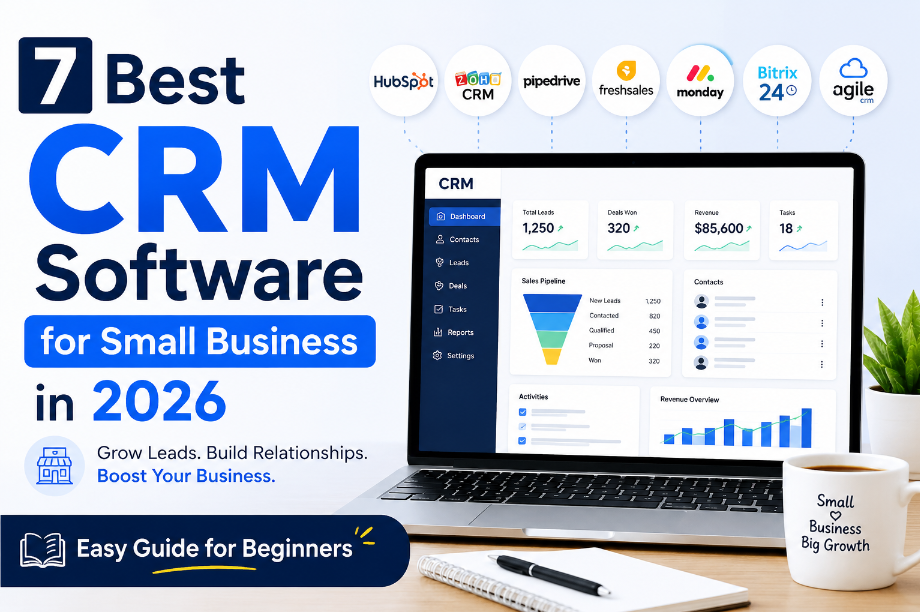
7 Best CRM Software for Small Business in 2026 (Easy Guide for Beginners)
Running a Small Business Is Not Easy
Finding the best CRM software for small business can feel confusing in 2026, especially for beginners.
A few years ago, Rahul started a small online business from home.
In the beginning, everything felt simple.
He had only a few customers, so he managed everything manually.
Customer names were saved in his phone.
Orders were written in a notebook.
Important messages stayed inside WhatsApp chats.
But slowly, the business started growing.
More customers came.
More emails arrived.
More follow-ups were needed.
And then problems started.
Sometimes Rahul forgot to reply.
Sometimes he missed important follow-ups.
A few customers even stopped buying because they got no response.
Rahul felt stressed almost every day.
That’s when he learned about CRM software.
And honestly, it changed everything.
Now all customer details stayed in one place.
Follow-ups became easier.
Work became more organized.
This is why many small businesses use CRM software in 2026.
In this guide, you’ll learn:
- What CRM software is
- Why small businesses need it
- The best CRM software for beginners
- Which CRM is best for your business
Let’s start.
What Is CRM Software?
CRM stands for Customer Relationship Management.
The name sounds complicated, but the idea is actually simple.
A CRM helps businesses manage customers better.
Think of it like a smart digital notebook.
It stores:
- Customer names
- Phone numbers
- Emails
- Messages
- Sales details
- Follow-up reminders
all in one place.
This helps businesses stay organized, save time, and improve customer relationships.
Why Small Businesses Need CRM Software in 2026
Many small businesses lose customers because they forget follow-ups.
Some businesses also struggle to manage customer details properly.
CRM software helps solve these problems.
A Good CRM Helps You:
- Track customer conversations
- Manage sales
- Save customer information
- Send follow-up reminders
- Stay organized
- Save time
- Improve customer communication
Even small businesses can benefit from using CRM tools today.
Quick Comparison Table
CRM Software
Best For
Free Plan
Beginner Friendly
HubSpot CRM
Beginners
Yes
Yes
Zoho CRM
Budget Users
Yes
Medium
Pipedrive
Sales Teams
Free Trial
Yes
Freshsales
Automation
Free Trial
Yes
Monday CRM
Team Management
Trial
Medium
Salesforce
Large Businesses
No
Difficult
Insightly
Project Tracking
Trial
Yes
Step 1: Decide What Your Business Needs
Before choosing a CRM, ask yourself:
Do You Need:
- Better customer management?
- Email follow-ups?
- Sales tracking?
- Team management?
- Automation?
Different businesses need different features.
For example:
- Freelancers may need simple customer tracking.
- Sales teams may need advanced sales tools.
- Growing businesses may need automation features.
Step 2: Choose a Beginner-Friendly CRM
Many CRM tools look confusing at first.
If you are a beginner, choose software that feels simple and easy to use.
Here are some of the best CRM software options for small businesses in 2026.
1. HubSpot CRM — Best Overall for Beginners
HubSpot CRM is one of the most popular CRM tools today.
The biggest reason people love it is simplicity.
Even beginners can learn it quickly.
Best Features
- Free plan available
- Easy dashboard
- Contact management
- Email tracking
- Sales pipeline
- Automation tools
Why People Like It
The dashboard looks clean and simple.
You do not need technical knowledge to use it.
Best For
- Beginners
- Freelancers
- Startups
- Online businesses
2. Zoho CRM — Best Budget CRM
Zoho CRM is great for businesses that want many features at a lower price.
Features
- Workflow automation
- Email tools
- Reports
- AI assistant
- Sales tracking
Good Things
- Affordable pricing
- Many useful features
- Good for growing businesses
Not So Good
The dashboard may feel confusing at first.
Best For
Small businesses with a limited budget.
3. Pipedrive — Best for Sales Teams
Pipedrive focuses mostly on sales management.
It helps businesses track deals easily.
Features
- Visual sales pipeline
- Deal tracking
- Automation
- Sales reports
Why Businesses Like It
The system feels simple and easy to understand.
Best For
Sales-focused businesses and agencies.
4. Freshsales — Best for Automation
Freshsales is a good option for businesses that want automation tools without spending too much money.
Features
- AI-based lead scoring
- Email automation
- Sales tracking
- Customer activity tracking
Best For
Businesses that want to save time using automation.
5. Monday CRM — Best for Team Management
Monday CRM is popular because of its visual and modern dashboard.
Features
- Team collaboration
- Project tracking
- Sales management
- Automation
Best For
Teams that work together on multiple projects.
Step 3: Start With the Free Plan
Many businesses make one common mistake.
They buy expensive plans too early.
You do not need to do that.
Start with the free version first.
Learn how the software works.
Upgrade later only if needed.
Step 4: Add Customer Information
After choosing your CRM, add:
- Customer names
- Emails
- Phone numbers
- Notes
- Previous conversations
Now everything stays organized in one place.
Step 5: Use Automation to Save Time
Automation is one of the biggest benefits of CRM software.
It helps businesses save time every day.
For example:
- Automatic emails
- Follow-up reminders
- Lead tracking
- Meeting reminders
These small features can make work much easier in 2026.
Common Mistakes Small Businesses Make
Choosing Complicated Software
Some CRM tools are too difficult for beginners.
Simple software is usually better for small businesses.
Forgetting Customer Follow-Ups
Many businesses lose customers because they forget replies.
CRM software helps prevent this problem.
Doing Everything Manually
Manual work becomes stressful as your business grows.
Good software helps businesses work faster and smarter.
FAQ
Which CRM is best for beginners?
HubSpot CRM is one of the best options for beginners because it is simple and easy to use.
Is free CRM software good?
Yes. Many free CRM tools work very well for small businesses in the beginning.
Do small businesses really need CRM software?
Yes. CRM software helps businesses manage customers, sales, and follow-ups more easily.
Which CRM is best for sales teams?
Pipedrive is one of the best CRM tools for sales-focused businesses.
Can CRM software help small businesses grow?
Yes. CRM software helps businesses stay organized, improve customer relationships, and save time, which can help businesses grow faster.
Final Thoughts
Running a small business is already hard enough.
Good CRM software helps you stay organized, save time, and build better relationships with customers.
If you want something simple and beginner-friendly, HubSpot CRM is a great option.
If you want affordable pricing with more features, Zoho CRM is also a strong choice.
The most important thing is this:
You do not need a huge company to start using CRM software.
Even small businesses can use CRM tools to stay organized, improve customer communication, and grow faster in 2026.